| Regions | Central Africa • West Africa • East Africa • Southern Africa |
| Timeline | 16th century to present |
| Key events | Extensive European exploration and mapping of Africa's interior • Faster pace of colonial settlement, infrastructure construction, and resource extraction • Gradual decolonization process with some areas remaining under European rule longer • Distinct modern geopolitical landscape of nation-states, ethnic groups, and cultural influences |
| Significance | The divergent history of Africa's interior has led to a contemporary geopolitical landscape that differs significantly from the one in our reality, with lasting impacts on the continent's development and global integration. |
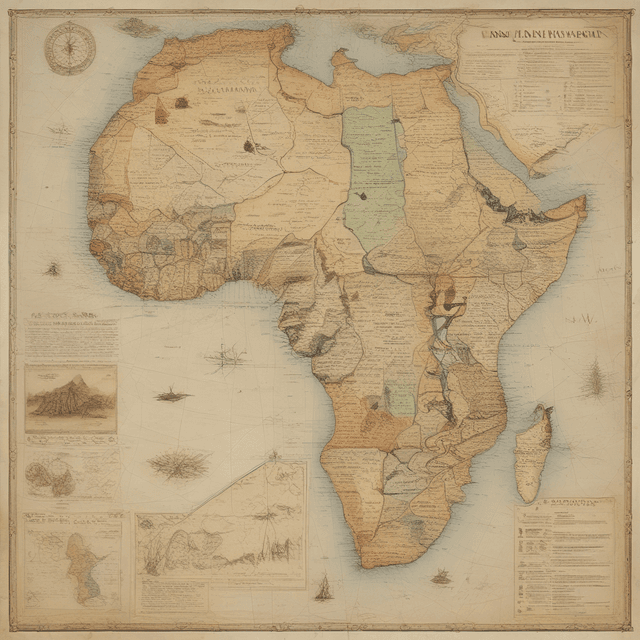
The interior of the African continent has a rich and complex history that diverges considerably from the timeline of our own world. While the vast majority of the continent's landmass remained largely unexplored and unmapped by Europeans until the 19th century colonial era in our reality, in this alternate timeline the interior was the subject of far more extensive exploration, settlement and economic integration starting as early as the 16th century.
The first wave of European exploration of the African interior began in the 1500s, as Portugal, Spain, England and France raced to establish trading posts, missionary outposts and small settlements along the continent's coasts. Motivated by a desire to access the lucrative trade in spices, gold, slaves and other resources, these early colonial powers soon turned their sights to venturing deeper into the uncharted heartland.
Expeditions led by the likes of Diogo Cão, Vasco da Gama, Richard Francis Burton and [[David Livingstone] crisscrossed the continent, mapping major waterways, mountain ranges and population centers. By the 1700s, large swaths of central and eastern Africa were under the control of European colonial administrators, with bustling trading hubs, agricultural plantations and mining operations springing up.
This accelerated pace of European colonization enabled a rapid modernization of Africa's interior regions compared to our own timeline. Colonists built an extensive network of roads, railways, river transport and telegraph lines to facilitate the extraction and export of natural resources like ivory, rubber, minerals and agricultural products. Major cities like Kinshasa, Nairobi and Lusaka grew into important regional economic and administrative centers.
The influx of European capital, technology and expertise also spurred industrialization in some areas, with mining, manufacturing and agriculture becoming important parts of the colonial economies. However, this development was highly uneven, with the bulk of the profits flowing back to the European imperial powers rather than reinvested locally.
The process of decolonization in this alternate Africa was generally more gradual and piecemeal compared to our world, with some regions remaining under European rule for decades longer. The Belgian Congo, for example, did not gain independence until the 1960s, while Rhodesia and South Africa maintained white-minority governments well into the 1980s.
As colonial powers relinquished control, a complex patchwork of newly independent nation-states emerged, often with boundaries that did not neatly align with preexisting ethnic, linguistic and cultural divisions. This has led to ongoing political instability, civil wars and authoritarian rule in many parts of the continent.
The legacy of prolonged European colonization has also left a complex imprint on the cultural and ethnic makeup of the African interior. While traditional tribal and linguistic identities remain strong, centuries of intermixing, population displacement, and the introduction of European languages, religions and administrative systems have created a diverse mosaic.
Many modern African nations are home to a multiplicity of ethnic groups, each with their own histories, customs and perspectives. The continent's cultural landscape is further enriched by the influences of Islam, Christianity, Hinduism and other belief systems introduced during the colonial era. This diversity has both benefits and challenges in terms of national unity and integration.
The current geopolitical situation in the African interior reflects this complex history. A patchwork of nation-states, many with unresolved territorial disputes and ethnic tensions, coexist alongside zones of enduring European economic and political influence. Significant natural resources, from minerals to arable land, make the region a site of competition between global powers.
Efforts at greater regional economic and political integration, through organizations like the African Union, have had mixed results. The legacy of colonialism and the lingering impacts of the Cold War continue to shape the contours of power and development across this vital part of the world.
